High Head, High Flow – Shinhoo EPS25-40NC Horizontal Multistage Wet Rotor Pump Redefining Efficiency Standards
2026-06-04To enhance the professionalism and stability of water circulation systems, Shinhoo introduces its benchmark product – EPS25-40NC horizontal multistage wet rotor pump. Built on proprietary hydraulic models and high-efficiency wet rotor technology, it achieves multiple performance breakthroughs, offering a cost-effective pumping solution for water boosting, HVAC, thermal management, and other systems.
High Head & High Flow – Powerful and Stable
The horizontal multistage impeller series design delivers a rated head of up to 45m and a maximum flow of 16 m³/h – 60% higher head than conventional single-stage pumps. As a system-integrated component, it easily covers whole-house water supply in large homes and HVAC circulation systems, ensuring strong and stable flow at every terminal.
Quiet & Low Energy – Green and Peaceful
Through 3D fluid optimization and high-efficiency motor simulation technology, hydraulic efficiency is significantly improved, reducing annual energy consumption by 20%. Operating noise is far below industry averages, allowing you to enjoy a quiet and comfortable environment.
Safe & Durable – Three Times Longer Service Life
The fully canned sealing structure ensures true zero leakage. All wetted parts are made of stainless steel and have passed a 720‑hour salt spray test, withstanding humid or corrosive environments. Service life is more than three times that of conventional domestic pumps – dramatically reducing replacement and maintenance costs.
High Adaptability – Reliable in Complex Conditions
Volume is reduced by 20%, with an IP56 protection rating. It operates stably over a wide ambient temperature range from -40°C to 75°C and handles media temperatures from -40°C to 85°C. Complex installation scenarios are easily managed.
Typical Applications
Water boosting / HVAC systems
Thermal management systems
Shinhoo EPS25-40NC horizontal multistage wet rotor pump redefines residential and light commercial water circulation standards with high head, low noise, zero leakage, and extended service life. Choose it for peace of mind, energy savings, and long‑term reliability.
How to Reduce Noise and Maintenance Costs in Commercial Heating Systems
2026-06-04In commercial heating systems, the circulator pump rarely attracts attention—until something goes wrong. Excessive noise, recurring maintenance, water leakage, and unexpected downtime can all be traced back to the performance of a single component responsible for keeping hot water moving throughout the system.
For apartment buildings, office complexes, hotels, schools, and district heating installations, reliable water circulation is essential for maintaining comfort and energy efficiency. As building operators face increasing pressure to reduce operating costs while extending equipment lifespan, the selection of a circulator pump has become more important than ever.
Why Noise Is Becoming a Bigger Concern in Modern Heating Systems
Noise generated by circulation pumps is often underestimated during system design. However, in residential and commercial buildings, continuous pump operation can contribute significantly to overall background noise levels.
Common causes of pump noise include hydraulic imbalance, bearing wear, cavitation, and vibration generated during operation. In many older systems, pumps become noticeably louder as flow demand increases, particularly during peak heating periods.
For building owners and facility managers, excessive noise can lead to occupant complaints and negatively affect user comfort. This is especially true in apartment buildings, hotels, healthcare facilities, and educational institutions where quiet operation is expected.
As a result, low-noise circulation solutions are increasingly becoming a priority in modern HVAC and heating projects.
The Hidden Cost of Pump Maintenance
While energy consumption often receives the most attention, maintenance costs can represent a significant portion of a heating system's lifecycle expense.
Traditional circulator pumps typically rely on mechanical seals to prevent leakage between rotating and stationary components. Over time, these seals are exposed to continuous friction, temperature fluctuations, and water quality variations. Eventually, wear occurs, increasing the risk of leakage and requiring maintenance intervention.
For commercial facilities operating around the clock, even a minor pump failure can result in service disruptions, increased labor costs, and unexpected repair expenses.
Reducing maintenance requirements is therefore not only a technical consideration but also a financial one.
Material Durability Matters More Than Many Realize
The operating environment inside a heating system can be demanding. Continuous circulation, elevated temperatures, and long operating hours place constant stress on pump components.
Corrosion is another factor that can shorten equipment lifespan. Components exposed to water over many years may experience deterioration that affects both performance and reliability.
This is why material selection remains one of the most important factors when evaluating a commercial circulator pump. Durable materials help maintain hydraulic performance, protect water quality, and reduce the likelihood of premature component failure.
What Should Engineers Look for in a Commercial Circulator Pump?
When specifying a circulator pump for heating applications, engineers typically focus on several key considerations:
Stable flow performance under varying operating conditions
Low operating noise
Long-term reliability
Resistance to corrosion and wear
Minimal maintenance requirements
Compatibility with different power supplies and system configurations
Finding the right balance between these factors can significantly influence the overall performance and operating cost of a heating system.
A Practical Approach to Reliable Water Circulation
To address these common industry challenges, modern circulator pumps are increasingly designed around maintenance-free operation, improved hydraulic efficiency, and enhanced durability.
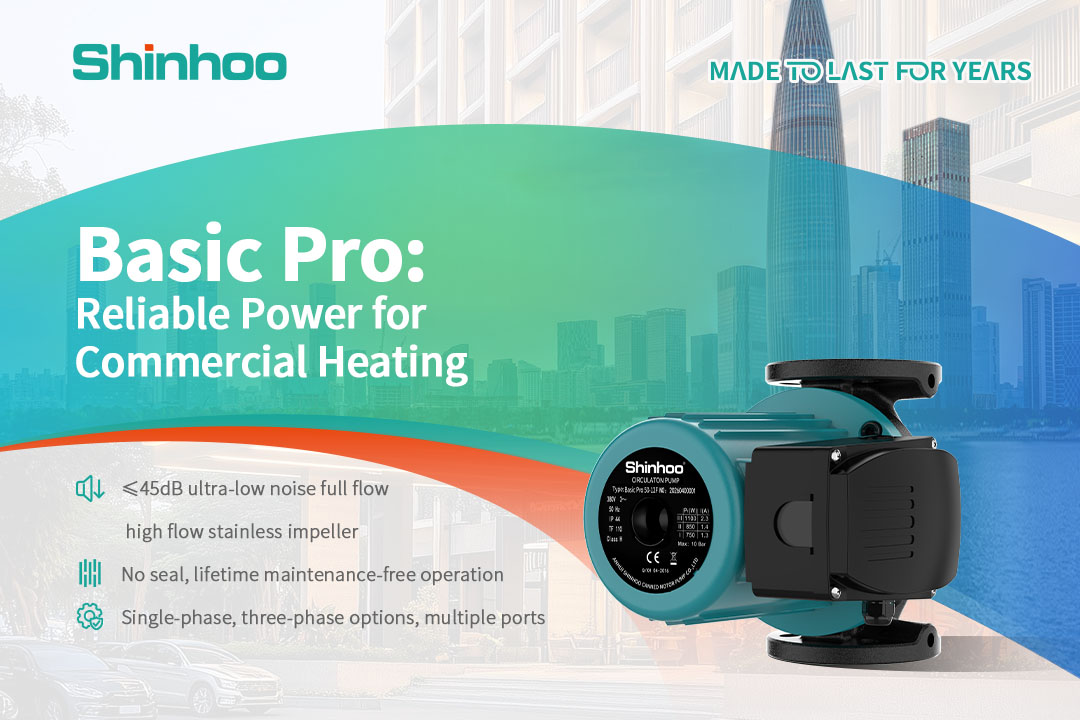
Shinhoo Basic Pro Series is one example of this design philosophy. Developed for commercial and residential heating applications, the pump combines quiet operation with robust construction and long-term reliability.
One of its distinguishing features is the ability to maintain operating noise levels of no more than 45 dB(A) across the entire flow range. Rather than achieving low noise only at specific operating points, the pump is designed to operate quietly under varying system loads, making it suitable for environments where acoustic comfort is important.
The hydraulic system incorporates a stainless steel impeller that provides excellent resistance to corrosion while maintaining efficient water circulation. Compared with conventional materials, stainless steel helps reduce the risk of rust contamination and contributes to stable long-term performance.
Another important advantage is the wet-rotor design. Because the pump operates without a mechanical seal, the risk of seal-related leakage is eliminated. The circulating liquid lubricates the internal bearings, removing the need for routine seal replacement and significantly reducing maintenance requirements throughout the pump's service life.
To further improve durability, the shaft is protected by a DLC coating. This highly wear-resistant surface helps protect against corrosion, oxidation, and long-term mechanical wear, supporting reliable operation under continuous-duty conditions.
Basic Pro Series is available in multiple connection sizes as well as both single-phase and three-phase configurations, allowing engineers and installers to match the pump to a wide range of system requirements.
Suitable Applications
Thanks to its combination of quiet operation, maintenance-free construction, and durable materials, the Basic Pro Series can be used across a broad range of heating and HVAC applications, including:
Commercial heating systems
Apartment and residential heating networks
Office building HVAC systems
District heating installations
Boiler circulation systems
Domestic hot water recirculation
Solar thermal systems
Ground-source heating systems
Heat recovery applications
Cooling and air-conditioning systems
Looking Beyond Initial Purchase Cost
When evaluating a circulator pump, the purchase price is only one part of the equation. Noise levels, maintenance requirements, component durability, and long-term reliability often have a much greater impact on total ownership cost over the life of the system.
For this reason, many building owners, HVAC contractors, and equipment manufacturers are increasingly prioritizing solutions that can operate quietly, require minimal maintenance, and provide dependable performance year after year.
By combining low-noise operation, a seal-less wet-rotor design, corrosion-resistant materials, and durable DLC-coated components, the Shinhoo Basic Pro Series offers a practical solution for modern heating systems seeking both efficiency and reliability.
As commercial buildings continue to pursue higher energy performance and lower operating costs, selecting the right circulator pump remains one of the simplest ways to improve system performance while reducing long-term maintenance concerns.
Shinhoo Promo Series Domestic Hot Water Booster Pump | Auto-Start, Maintenance-Free Pump Solution
2026-06-04Low water pressure is a common issue in older residential buildings, high-rise apartments, and urban housing systems. It often leads to weak shower performance, slow hot water delivery, delayed water heater ignition, and inefficient household appliance operation. Shinhoo Promo Series domestic hot water booster pump is designed to solve these problems by providing stable, instant, and energy-efficient water pressure boosting for residential hot water systems.
Engineered as a reliable hot water booster pump for home use, Promo Series automatically adjusts to household water demand. A built-in flow switch enables true automatic water pressure boosting—the pump starts immediately when a tap, shower, or water outlet is opened, and stops when demand ends. This on-demand operation improves energy efficiency while ensuring consistent water pressure throughout the home.
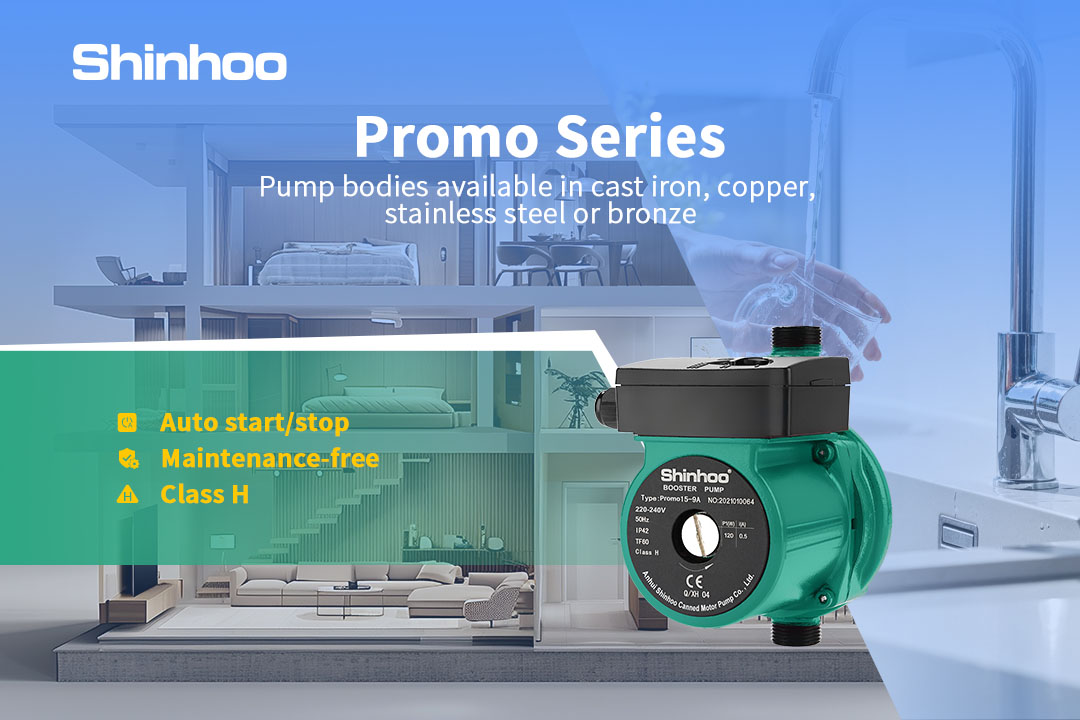
Designed for long-term residential operation, the pump is equipped with a high-reliability two-pole single-phase induction motor with Class H insulation (up to 180°C temperature resistance). This ensures stable performance even under continuous operation conditions. Optional thermal overload protection further enhances safety by automatically shutting down the pump in overheating situations, protecting the system and extending service life.
Promo Series features a seal-free, maintenance-free pump structure, eliminating traditional mechanical seal wear and leakage risks. The motor is directly cooled and lubricated by the pumped clean water, resulting in quiet operation, improved durability, and significantly reduced maintenance requirements. This makes it a dependable choice for homeowners seeking a long-lasting maintenance-free water booster pump system.
Built to meet CCC and CE certification standards, the Shinhoo Promo Series ensures compliance with international electrical safety and performance requirements. It is suitable for continuous use in residential hot water circulation and domestic water supply systems.
To adapt to different installation environments and water conditions, pump body materials are available in cast iron, copper, stainless steel, and bronze, offering flexibility for corrosion resistance and system compatibility.
Typical applications include:
- Domestic hot water boosting for showers, faucets, and water heaters
Water pressure enhancement in older residential buildings
Hot water supply support for upper floors in multi-story apartments
Residential low water pressure improvement systems
Shinhoo Promo Series is a dependable solution for domestic hot water pressure boosting, combining automatic operation, maintenance-free design, and durable motor technology. Whether used as a home shower pressure booster pump or part of a building water supply system, it ensures strong and stable water flow whenever needed—just turn on the tap and enjoy instant water pressure.
Why More Boiler Manufacturers Are Choosing Shinhoo Wall Hung Gas Boiler Circulation Pumps
2026-06-04As boiler technology continues to evolve toward higher efficiency, smarter controls, and lower energy consumption, circulation pumps are no longer just auxiliary components — they have become a critical factor in overall system performance.
Unlike suppliers that focus on only a single pump category, Shinhoo has developed a complete wall hung gas boiler circulation pump platform covering everything from conventional fixed-speed pumps to high-efficiency ECM smart pumps with PWM and LIN communication. This allows OEM manufacturers to develop entry-level boilers, mid-range condensing boilers, and premium intelligent heating systems under one unified supply chain, greatly improving product flexibility and development efficiency for brands building multi-level boiler portfolios.
|
Feature |
GPA II |
||||
|
Communication |
– |
PWM |
PWM/LIN |
LIN |
|
|
Speeds |
I/II/III |
5/6/7m |
5/6/7/7.5m+Auto |
5/6/7/8/9m+Auto |
|
|
Feedback |
– |
Power |
Power |
Flow (±0.2m³/h) |
Full (Flow(±0.2m³/h) /Head/Power/Speed) |
|
Max Head |
6.5m |
7m |
7.5 m |
9 m |
|
|
Max Power |
140w |
45w |
60 W |
90 W |
|
|
Max Pressure |
0.3 MPa |
0.6 MPa |
|||
|
Anticlogging |
✅ Mechanical |
–
|
✅ Mechanical |
||
|
EEI |
– |
✅ ≤ 0.23-Part 3 |
✅ ≤ 0.20-Part 3 |
||
|
Noise |
26 dB(A) |
||||
Modern boiler systems must comply with ErP energy efficiency regulations, where pump performance plays a critical role in the overall system rating. As a result, circulation pumps are no longer just standard components, but have become a strategic element in achieving higher system efficiency and compliance.
As the heating industry continues to shift toward energy-efficient, smart, and connected solutions, the role of circulation pumps is becoming increasingly important. Through ECM technology, intelligent communication, flow feedback systems, and compact integrated design, Shinhoo is strengthening its competitive position in the next generation of wall-hung gas boiler circulation pumps.
For boiler manufacturers aiming to enhance product performance, energy efficiency, and intelligent control capabilities, Shinhoo provides a complete circulation pump solution fully aligned with the future direction of the HVAC industry.
Aquamaster – Ultra-Quiet Constant Pressure Booster Pump
2026-06-04For residential and light commercial water boosting applications such as villas, apartments, hotels, and domestic water supply systems, pump noise, efficiency, and reliability directly affect user comfort and operating costs.
Aquamaster booster pump provides a high-efficiency, ultra-quiet, and reliable solution for stable water pressure boosting in modern water supply systems.
Ultra-Quiet Operation – Only 45 dB(A)
With operating noise as low as 45 dB(A), Aquamaster runs significantly quieter than conventional booster pumps, ensuring comfortable operation even at night or in noise-sensitive environments.
It is especially suitable for hotels, apartments, villas, and other applications where low noise is essential.
IE5 Permanent Magnet Motor with Water Cooling
Equipped with an IE5-class permanent magnet motor, Aquamaster delivers significantly lower energy consumption compared with traditional induction motors.
The water-cooling design helps maintain stable operating temperatures during continuous operation, improving long-term reliability and efficiency.
The pump delivers a maximum head of 45 meters and a suction lift of up to 8 meters, making it suitable for high-rise water supply systems and groundwater extraction applications.
Variable-Speed Constant Pressure Control
The intelligent constant pressure control system automatically adjusts motor speed according to real-time water demand, effectively reducing pressure fluctuations and improving user comfort.
Whether a single tap or multiple outlets are used simultaneously, the system maintains strong, stable, and consistent water pressure.
WRAS & MCE Certified
Aquamaster is certified to WRAS and MCE standards, complying with international requirements for drinking water safety and electrical performance.
It ensures safe drinking water applications while supporting system compliance for residential and commercial projects.
Compact and Modern Design
Featuring a compact structure and clean modern appearance, Aquamaster can be easily installed in tight equipment rooms or installation spaces where aesthetics are important.
The system can also be configured in parallel multi-pump setups for higher flow capacity or duty/standby reliability requirements.
Typical Applications
· Commercial water boosting
· Groundwater extraction for domestic use
· Domestic water pressure boosting
· Hotel and apartment water supply systems
· Villa water pressurization systems
Reliable Water Boosting for Residential & Commercial Systems
Aquamaster booster pump delivers professional-grade performance for residential and light commercial water supply systems, combining ultra-quiet operation, high energy efficiency, and stable constant-pressure control in one compact solution.
Complete Guide to Choose a Commercial Bread Oven
2026-06-03Complete Guide to Choose a Commercial Bread Oven. To open a Bakery or Baking Shop. Choose the right oven for stable output and doubled efficiency; Choosing wrong can result in electricity, labor, and damage to the finished product. This article uses clear text and practical points to help you quickly select a commercial bread oven that is suitable for you.
First, let's understand: what are the types of commercial bread ovens?
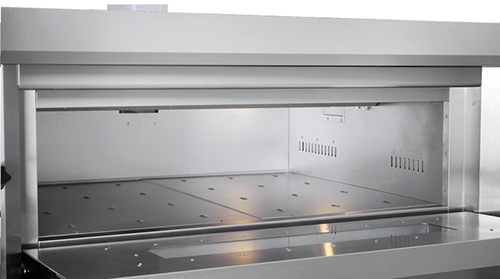
1. Deck Oven (iron and stone deck to choose) - preferred for European bread/baguettes.
Core features: each deck independent temperature control, stone slab heat storage.
Suitable products: European bread, baguettes, soup, pizza.
Advantages: crispy outer skin, beautiful cutting lines, and wheat fragrance.
Suitable for stores: specializing in artisan bread and boutique baking shops
2. Hot air circulation oven (wind stove) - Mass production pastry/toast
Core features: strong hot air, multi-layer baking, uniform heating
Suitable for products: toast, meal buns, croissants, biscuits, puff pastry
Advantages: high efficiency, good consistency, suitable for mass production
Suitable for stores: walk-in bakeries, chain stalls
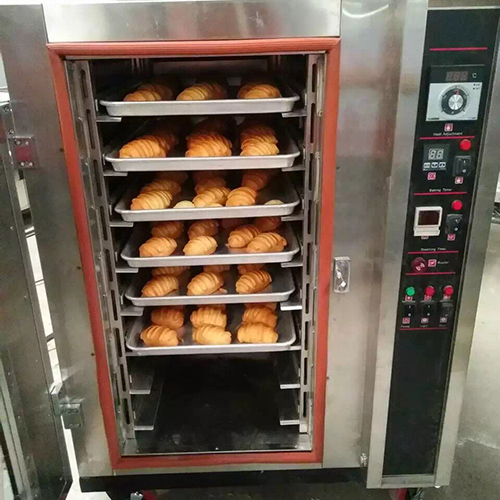
3. Rotating rack oven - Large factory/central kitchen
Core features: super large capacity, continuous baking Suitable for: daily production of thousands of pieces, factory production
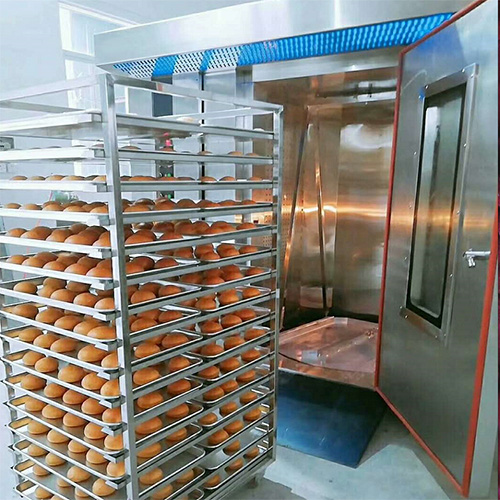
Second: 5 core parameters must be considered when choosing:
1. Capacity and number of layers (choose according to production volume)
Small store: one deck two pans / two deck four pans
Medium store: three deck six pans / three deck nine pans
High yield store: three deck twelve pans/four deck sixteen pans
Suggestion: Reserve 20% margin to cope with peak season orders.
2. Energy type: Electricity vs Gas
Advantages of electric ovens: precise temperature control, simple installation, clean
requirements: mostly require 380V three-phase electricity.
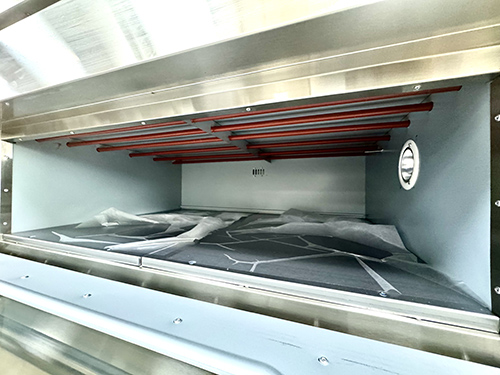
Gas ovens advantages: fast heating, low long-term use cost.
Requirements: gas connection required. Approval for installation.
Suggestion: Small shops should prioritize electricity use; Large factories or big daily baking capacity shops are more choosing gas.
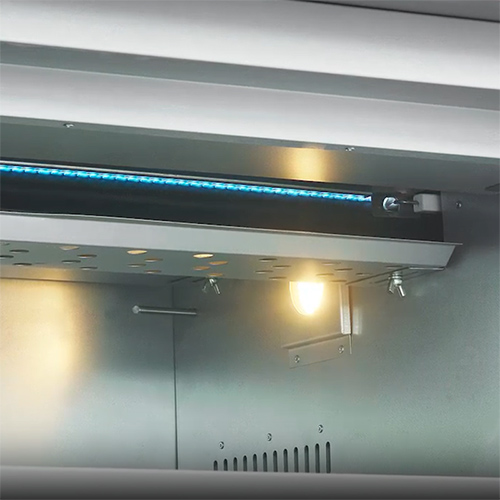
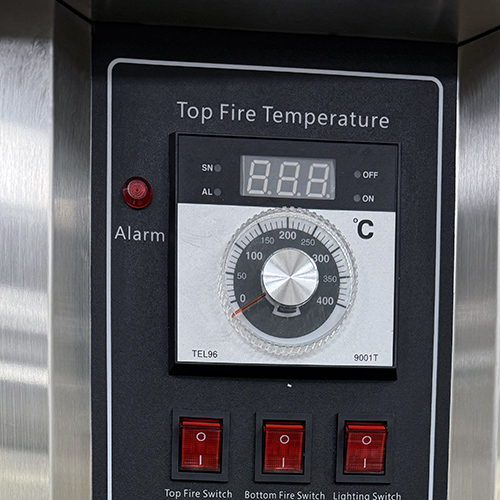
3. Temperature control accuracy (determines whether bread tastes good or not)
High quality commercial oven: temperature difference within ± 3 ℃
Must see function: independent temperature control (upper and lower fire/layered temperature control)
Timing function: easy to use
4. Material and workmanship
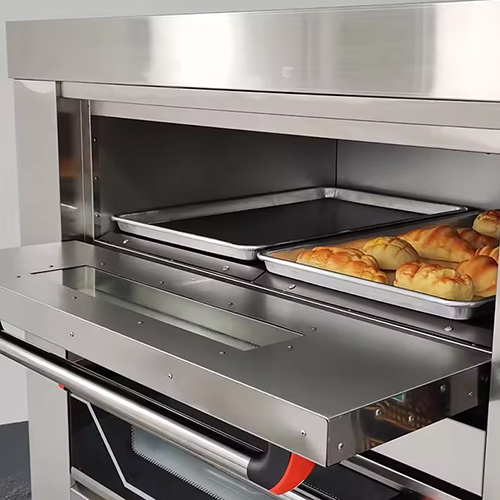
Inner liner: priority stainless steel, durable and easy to clean
Layers: thickened stone slab/cast iron, good heat storage
Door body: double-layer tempered glass, good insulation, anti scalding
5. Power and installation conditions
confirmed in advance: store voltage, power, air switch, ground wire, mismatched circuit will trip and burn the machine!
How to Choose the Right Paper Pleating Machine for You
2026-06-03How to choose the right equipment for you—I believe this is a headache for many buyers, so I've decided to open a discussion on this topic.
Generally, there are three scenarios,Let's use an origami machine as an example:
1. If you're a new manufacturer starting a project to produce a new product but lack familiarity with the process, your first step is to identify the product type you wish to manufacture on the market. After confirming the product info like pleating height ,pleating width and pleating distance, discuss and verify these details with your technical team. Then, you can confirm the equipment model with the manufacturer.You must be get the most suitable paper pleating machine.
2. If you're an experienced manufacturer who knows your product dimensions, pleat spacing, and has specific production volume requirements, I recommend going straight to custom-made equipment tailored to your needs.
3. If you're a middleman unfamiliar with both product details and customer requirements, I suggest doing your homework privately before reaching out to us.This allows the project to proceed efficiently.
Dismantling methods and steps of guide idler wheel and final drive sprocket of excavator excavation
2026-06-02Dismantling methods and steps of guide idler wheel and final drive sprocket of excavator excavation
Disassembly is an indispensable task in excavator maintenance. It needs certain steps and methods to complete it. Otherwise, new faults will be added. Today we will talk about the disassembly methods of excavator guide idler wheel and final drive sprocket.
The disassembly steps of excavator front idler are as follows:
First remove the front idler wheel from the crawler rack, and then decompose the guide wheel.
Note: Before decomposition, the greasy oil inside should be released and the work should be careful. The floating seal ring with bearings on one side of the floating seal ring should be carefully removed, and then the shaft, sleeve and spring components should be disassembled one by one. The dismantled guide idler wheel and other parts should be inspected to see if there are pits, cracks and fracture defects. If the wear of the track tensioner idler exceeds the limit value, it should be repaired by surfacing. Check the dimensions of the shaft and bearing, check whether the track spring has cracks and fatigue defects, and whether it is broken. After finding out the problem, replace the new parts.
The assembly sequence is opposite to the disassembly sequence. When installing spring components, hydraulic jacks can be used as auxiliary equipment if necessary. The assembly of floating seal rings should pay enough attention. After assembly, the engine oil should be injected from greasy nozzles, and the amount of oil should be about 0.3L. After installation of guide wheels, the tension of track should be adjusted.
Excavator final drive sprocket steps:
When disassembling, the track shoe plate, cover plate, hydraulic hose, hydraulic motor components and so on are disassembled one by one. If necessary, lifting machine is used to assist the lifting and disassembly.
After the disassembly is completed, check whether the driving sprocket wheel has broken teeth, cracks, damage and wear, check whether the brake valve, hydraulic motor and gearbox are damaged.
Installation sequence is contrary to disassembly sequence. When assembling, attention must be paid to the installation status and direction of the original parts. All 0-rings must be replaced by new parts. When fastening bolts, the specified torque must be tightened.
Above is the way to disassemble track idler and drive sprocket of excavator. Disassembly is a detailed work. It needs patience to complete.
What are different types hydraulic cylinder on an excavator
2026-05-25An excavator typically consists of several hydraulic cylinders that enable the machine to perform various functions. Here are the different types of cylinders commonly found on an excavator:
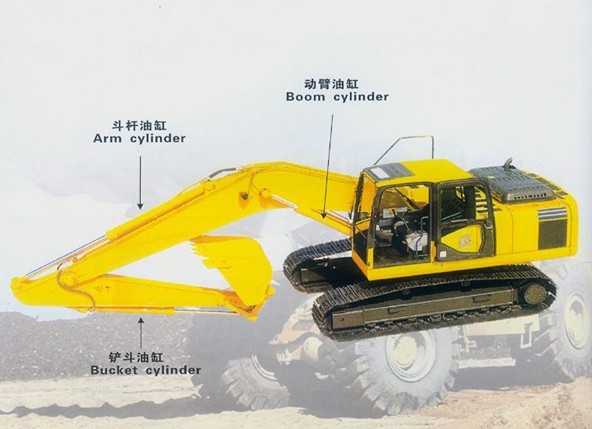
Boom Cylinder: The boom cylinder is connected to the boom and enables the vertical movement of the boom. It allows the excavator to raise and lower the boom for digging, lifting, and reaching different heights.
Arm Cylinder: The arm cylinder is attached to the arm or stick of the excavator. It controls the extension and retraction of the arm, allowing the excavator to reach forward and pull back during digging operations.
Bucket Cylinder: The bucket cylinder is responsible for operating the excavator's bucket. It controls the opening and closing of the bucket jaws or the tilt movement of the bucket. This cylinder allows the operator to dig, scoop, and release materials.
Swing Cylinder: The swing cylinder enables the rotation of the upper structure of the excavator. It allows the excavator to swing or rotate horizontally, typically up to 360 degrees, allowing the operator to position the machine in different directions without having to move the tracks.
Track or Travel Cylinder: Excavators equipped with crawler tracks have track cylinders that control the movement of the machine. These cylinders extend and retract to move the tracks, enabling the excavator to navigate across different terrains, change direction, and adjust its position.
These cylinders work in conjunction with the excavator's hydraulic system, which uses hydraulic fluid to transmit power and control the movements of the machine. By extending and retracting these cylinders, the excavator can perform a wide range of digging, lifting, swinging, and traveling actions, making it a versatile and powerful piece of equipment for construction and excavation projects.