EPA50-40ZAX IE5 Horizontal Single Stage Pump A Reliable, Efficient Solution for Modern Fluid Handling
2026-09-03Pumps are essential equipment in industrial production and infrastructure operations. From cooling data center servers and managing temperatures at EV charging stations to domestic water supply and HVAC systems, the reliability, efficiency, and service life of a pump directly impact overall system operating costs and stability.
Anhui Shinhoo presents the EPA50-40ZAX IE5 Horizontal Single Stage Pump — a solution built on a design philosophy of simplicity and reliability, tailored for a wide range of fluid handling applications.
High Reliability: Maintenance-Free, No Wear-Prone Parts
Traditional centrifugal pumps typically rely on mechanical seals for shaft sealing. The continuous friction between rotating and stationary seal faces makes the seal a wear-prone component. Over time, seal wear can lead to leakage, performance degradation, and even pump failure, requiring regular inspection and replacement.
The EPA50-40ZAX adopts a sealless magnetic drive design, where the motor transmits power to the impeller through a magnetic coupling without a physical shaft penetrating the pump housing — effectively eliminating the mechanical seal and its associated vulnerabilities.
Key advantages include:
-
No dynamic seal faces — no seal ring wear
-
Fluid fully contained within the pump housing — reduced leakage risk
-
No scheduled seal replacements — reduced maintenance workload
-
Reduced unexpected downtime caused by seal failure
For data centers, charging stations, and continuous production facilities that require long-term stable operation, this design contributes to improved system reliability and lower maintenance costs.
Corrosion-Resistant: Suitable for Diverse Environments
Different applications involve different pumped media and environmental conditions. Salt-laden air in coastal areas, chemical additives in industrial cooling loops, corrosion inhibitors in data center coolants, and dissolved oxygen in hot water systems can all potentially attack pump materials.
The EPA50-40ZAX features corrosion-resistant materials across all wetted parts, enabling reliable operation across a variety of media and environments. Whether in energy storage liquid cooling systems, industrial circulation systems, or data center liquid cooling, the pump maintains stable hydraulic performance throughout its service life, helping extend equipment longevity.
IE5 Permanent Magnet Synchronous Motor: High Efficiency, Compact Design
The EPA50-40ZAX is powered by an IE5 permanent magnet synchronous motor — one of the higher efficiency classes defined by the International Electrotechnical Commission (IEC). Compared to conventional IE3 induction motors, it offers advantages in power factor, size, and efficiency across the full speed range:
| Feature | Conventional IE3 Induction Motor | EPA50-40ZAX IE5 PMSM |
|---|---|---|
| Efficiency class | IE3 | IE5 |
| Power factor | 0.80–0.85 | 0.95–0.98 |
| Size/weight | Larger | Compact (approx. 30–40% smaller) |
| Low-speed efficiency | Declines noticeably | Remains high across full range |
| Temperature rise | Higher | Lower — extends insulation life |
The compact motor design makes the EPA50-40ZAX suitable for space-constrained installations such as EV charging cabinets, energy storage containers, and data center racks. Meanwhile, the higher efficiency contributes to lower long-term electricity costs.
Variable Frequency Drive (VFD): Adaptive Operation to Match Demand
A high-efficiency motor paired with intelligent control delivers greater energy savings.
Traditional fixed-speed pumps operate only at rated speed. When system demand decreases — for example, during low-load periods — excess energy is typically wasted through valve throttling.
The EPA50-40ZAX supports Variable Frequency Drive (VFD) operation, automatically adjusting motor speed to match actual system demand:
-
Cubic law energy savings: at 80% speed, power consumption drops to approximately 50% of full-speed operation
-
Soft start/stop reduces water hammer and extends system life
-
Can be paired with pressure, temperature, or flow sensors for constant pressure, temperature, or flow control
In applications such as HVAC systems, domestic water supply, and data center liquid cooling, variable frequency drive technology helps achieve meaningful energy savings.
Communication and Control
The EPA50-40ZAX supports PWM control as standard configuration, with optional CAN bus or RS-485 communication interfaces to accommodate different control system requirements.
These communication options enable integration with various monitoring and management platforms, supporting functions such as real-time parameter monitoring, fault diagnosis, and remote control.
The pump is also equipped with built-in protection features, including:
-
Overvoltage protection
-
Undervoltage protection
-
Overcurrent protection
-
Overtemperature protection
These integrated safeguards help reduce reliance on external protection components, simplify control panel configuration, and enhance overall system safety.
Simplified Installation
Integrated Cable — One-Piece Wiring
The EPA50-40ZAX features an integrated cable design, consolidating power and signal connections into a single wiring harness — reducing installation time and minimizing connection errors.
Standard Thread — Universal Compatibility
Standard thread connections eliminate the need for special adapters or custom flanges, ensuring compatibility with commonly available piping components and simplifying on-site installation.
Applications
The EPA50-40ZAX is suitable for a variety of fluid handling sectors:
-
EV Charging Station Liquid Cooling
-
Energy Storage Liquid Cooling
-
Data Center Liquid Cooling
-
Hot Water Circulation & HVAC
-
Domestic Water Supply
-
Industrial Circulation
-
Cleaning & Garden Sprinkler Irrigation
The design philosophy behind the EPA50-40ZAX can be summarized as: simplify the structure to enhance system reliability and reduce long-term operating costs.
For facility managers, system integrators, and plant engineers who value equipment stability, energy performance, and operational efficiency, the EPA50-40ZAX represents a solution worth considering.
Shinhoo — Made to Last for Years.

Mega S Series Circulation Pumps – Mechanical Seal-Free Design Addresses Leakage at the Source
2026-09-03In HVAC and water circulation systems, leakage is one of the most common equipment failures. Conventional pumps often experience seal wear over time, leading to leakage, unplanned downtime, and system instability.
The Mega S Series from Anhui Shinhoo adopts a fully enclosed wet-rotor design that eliminates the conventional mechanical shaft seal at the structural level, reducing a known leakage risk.
Design: Mechanical Seal-Free, Lower Leakage Risk
Conventional circulation pumps rely on a mechanical shaft seal to maintain a dynamic seal between the rotating shaft and the pump housing. Over time, seal wear, dry running, or thermal stress can lead to seal failure.
The Mega S uses a wet-rotor design in which the rotor is fully enclosed within the pump housing and is lubricated and cooled by the pumped fluid. There is no conventional mechanical seal – eliminating seal wear as a failure mode and removing the associated maintenance requirement.
Key Components and Durability
The pump shaft features a special surface coating that provides a degree of wear and corrosion resistance. Bearings are graphite/ceramic composite, offering self-lubricating properties suitable for frequent start-stop operation. Impellers and hydraulic components are precision-cast and dynamically balanced to help reduce operational vibration.
These design features are intended to support stable operation under normal service conditions and reduce unscheduled maintenance.
Operating Noise
The Mega S Series operates at noise levels ≤55 dB(A) across the range, with select Pro models achieving 38 dB(A). This acoustic performance is achieved through mechanical precision and optimized flow path design, making the series suitable for residential, commercial, and public buildings where noise is a consideration.
Project Reference
In a 42,000 m² residential project near Moscow, over 300 Mega S pumps were installed and operated through a winter season with low ambient temperatures. Project feedback indicated:
-
No leakage or mechanical failures reported
-
Stable heating system performance
-
Reduced maintenance workload compared to project expectations
Control and Protection Features
The Mega S Series offers a range of control and protection functions:
-
12 control modes – Constant Speed, Constant Pressure, Proportional Pressure, Temperature Control, ΔT Control, plus external signal options (0-10V, 4-20mA, PWM, Modbus)
-
15 protection functions – Overvoltage, undervoltage, overcurrent, phase loss, locked rotor, overtemperature, and other fault protections
-
TFT LCD display – for on-site parameter monitoring and commissioning
FAQ
Q: How does the Mega S reduce leakage risk?
A: The Mega S uses a fully enclosed wet-rotor design with no conventional mechanical shaft seal. The rotor is sealed within the pump housing and lubricated by the fluid it pumps. This structural approach eliminates the mechanical seal as a potential leakage point.
Q: What contributes to the durability of the Mega S?
A: The shaft features a special coating for wear and corrosion resistance. Graphite/ceramic composite bearings are self-lubricating and suitable for frequent start-stop cycles. Hydraulic components are precision-machined and dynamically balanced to reduce vibration.
Q: What are the noise levels of the Mega S?
A: The series operates at ≤55 dB(A), with select Pro models achieving 38 dB(A). These noise levels are suitable for residential, commercial, and public building applications.
Q: What is the real-world track record of the Mega S?
A: In a 42,000 m² residential project near Moscow, over 300 Mega S pumps operated through winter conditions with no leakage or mechanical failures reported, and maintenance requirements were reduced.
The Mega S Series is designed to address a known failure mode in conventional circulation pumps – mechanical seal leakage. It is suitable for HVAC and water circulation systems where operational stability and reduced maintenance are priorities.

F-AHM – Variable Speed Residential Booster Pump
2026-08-27For residential water supply systems, pressure instability, energy waste, and frequent maintenance are common headaches for homeowners and property managers alike. The F-AHM variable speed residential booster pump from Anhui Shinhoo is designed to address these challenges with intelligent control, reliable performance, and long-term durability.
-
Constant Pressure Water Supply
The F-AHM adopts variable speed control technology to maintain stable outlet pressure regardless of fluctuating inlet conditions or changing water demand. This ensures consistent water pressure for showers, faucets, and household appliances at all times. -
Automatic Energy-Saving Operation
The pump automatically adjusts its speed according to real-time water consumption. During low-demand periods, it runs at reduced speed to minimize power consumption, significantly lowering electricity costs compared to traditional on-off type pumps. -
Integrated Multiple Protection Functions
Built-in protection features include dry-run protection, over-current protection, over-voltage protection, and over-temperature protection. These safeguards automatically shut down the pump when abnormal conditions are detected, preventing damage and extending service life. -
Automatic Stop and Restart Function
When all taps are closed and no water flow is detected, the pump automatically stops to save energy and reduce wear. Once a tap is opened again, the pump restarts instantly, providing immediate water pressure without manual intervention.
The F-AHM series is suitable for the following residential and light commercial applications:
-
Residential Water Boosting
Ideal for single-family homes, villas, and multi-story apartments where municipal water pressure is insufficient for upper floors. -
Small Commercial Premises
Suitable for small hotels, guesthouses, restaurants, and offices that require reliable water pressure throughout the day. -
Water Supply Systems with Tanks
Compatible with rooftop tanks, underground reservoirs, and pressurized tank systems for automated water supply management. -
Irrigation and Garden Systems
Can be used for garden watering and small-scale irrigation applications requiring stable pressure.
FAQ – Quick Reference
Q1: What does "variable speed" mean for a residential booster pump?
Variable speed means the pump motor adjusts its rotation speed based on actual water demand. Instead of running at full speed constantly, it ramps up during high-demand periods and slows down when demand is low, resulting in energy savings and quieter operation.
Q2: How does the constant pressure function work?
The built-in pressure sensor continuously monitors outlet pressure. When pressure drops due to increased water usage, the pump speeds up to compensate; when pressure rises, it slows down. This ensures a steady pressure level regardless of how many taps are open.
Q3: What protection functions are included?
The pump integrates dry-run protection (shuts off when no water is detected), over-current protection (prevents electrical overload), over-voltage protection (guards against voltage spikes), and over-temperature protection (prevents motor overheating). All these functions are automatic and require no user intervention.
Q4: How does the automatic stop and restart function benefit me?
When no water is being used, the pump stops automatically to conserve energy and reduce mechanical wear. When you open a tap, the pump restarts within seconds – you don't need to press any buttons or reset anything.
Q5: Is the F-AHM noisy during operation?
Thanks to its variable speed design, the pump typically runs at lower speeds during night hours or low-demand periods, which reduces noise significantly compared to traditional fixed-speed pumps that always run at maximum speed.
The F-AHM variable speed residential booster pump combines constant pressure control, automatic energy-saving operation, comprehensive protection functions, and convenient stop-restart automation. Whether for a single-family home, a small hotel, or a commercial office, it delivers reliable water pressure while minimizing energy consumption and maintenance needs – a smart choice for modern water supply systems.

Relay Module for Double Pump System——Basic Pro Series
2026-08-27Light commercial heating and cooling systems require long-term continuous operation. When the primary pump fails unexpectedly, system interruption can lead to service disruptions and equipment damage. Some countries and regions (such as Russia) have enacted mandatory regulations requiring dual-pump redundancy in commercial systems.
Traditional single-pump systems lack intelligent switching mechanisms, leading to uneven wear, shortened service life, and rising maintenance costs.
Through integrated relay control, Relay Module for Double Pump System supports three operating modes (Alternating, Standby, Single), enhancing system stability, extending pump service life, and reducing maintenance costs. It is suitable for medium circulation in light commercial heating and cooling systems.
Product Overview
This module is compatible with multiple Shinhoo pump models and is widely used for medium circulation in light commercial and industrial heating and cooling systems. Typical applications include three-story hotels, commercial pump rooms, and other high-reliability facilities.
Core concept:
One duty pump + One standby pump. Dual protection for continuous operation.
System Architecture & Operating Modes
The relay module supports three switchable operating modes:
Alternating Mode
-
24h automatic switchover and fault self-start, enhancing durability
-
24h automatic alternation
-
Automatic fault switchover
Standby Mode
-
One duty, one backup, delivering dual safety assurance
Single Pump Mode
-
Energy-efficient independent operation for lower demand
-
Optimized operation during low-demand periods
Key Benefits
-
System stability ↑70% – Smooth, consistent supply
-
Product lifespan ↑50% – Robust and durable
-
Maintenance cost ↓50% – Less frequent servicing
Flexible Maintenance Scheduling
New relay module for double pump technology – compatible with multiple Shinhoo models.
Engineering Design & Installation Features
-
Modular direct mounting – quick and easy wiring
-
Integrated design with clear speed settings and real-time status monitoring
-
Interfaces: Power, Speed adjustment, Communication cable
-
Intuitive Control & Status Indication
Safety Note: Disconnect power before removing terminal box cover.
Application Scenarios
-
Three-story and above hotel hot water and heating circulation systems
-
Commercial pump room dual-pump redundancy configurations
-
Light commercial heating system medium circulation
-
Small commercial cooling system medium circulation
-
Heating systems requiring compliance with relay module for double pump system configuration regulations in some regions
FAQ
What is the relay module for double pump system used for?
It coordinates two pumps in one system, ensuring automatic takeover when one pump fails. It is suitable for medium circulation in light commercial heating and cooling systems.
Why do commercial systems need relay module for double pump system configuration?
Regulations in some regions (such as Russia) mandate duty and standby pumps in commercial heating and cooling systems to ensure continuous operation and prevent service interruptions caused by single-pump failure.
What operating modes does the system support?
Three modes: Alternating Mode (24h automatic switchover and fault self-start), Standby Mode (one duty, one backup), and Single Pump Mode (energy-efficient independent operation for lower demand).
What happens if one pump fails?
In Alternating or Standby mode, the standby pump automatically takes over to ensure continuous water supply or medium circulation. In Single Pump mode, automatic switchover does not occur.
Which pump models are compatible?
The module is compatible with multiple Shinhoo pump models. It can be integrated within the relay module for double pump terminal box or paired with single pumps to form a relay module for double pump system.
Is installation complicated?
No. The module features modular direct mounting with clear interfaces for quick and easy wiring. Professional technicians can complete installation and deployment quickly.
The Science of Temperature Control in Candy Extruders From Overall Heating to 3-Zone Independent Control
2026-07-13
The extrusion process is a critical step in candy forming, and its precision directly impacts the final product's shaping, appearance, and texture. During the extrusion of candy ropes, you may occasionally notice intermittent feeding or even direct breakage. This not only causes raw material waste but also compromises the efficiency and aesthetic quality of subsequent forming stages. In many cases, the root cause of this material breakage lies in inadequate temperature control within the machine.
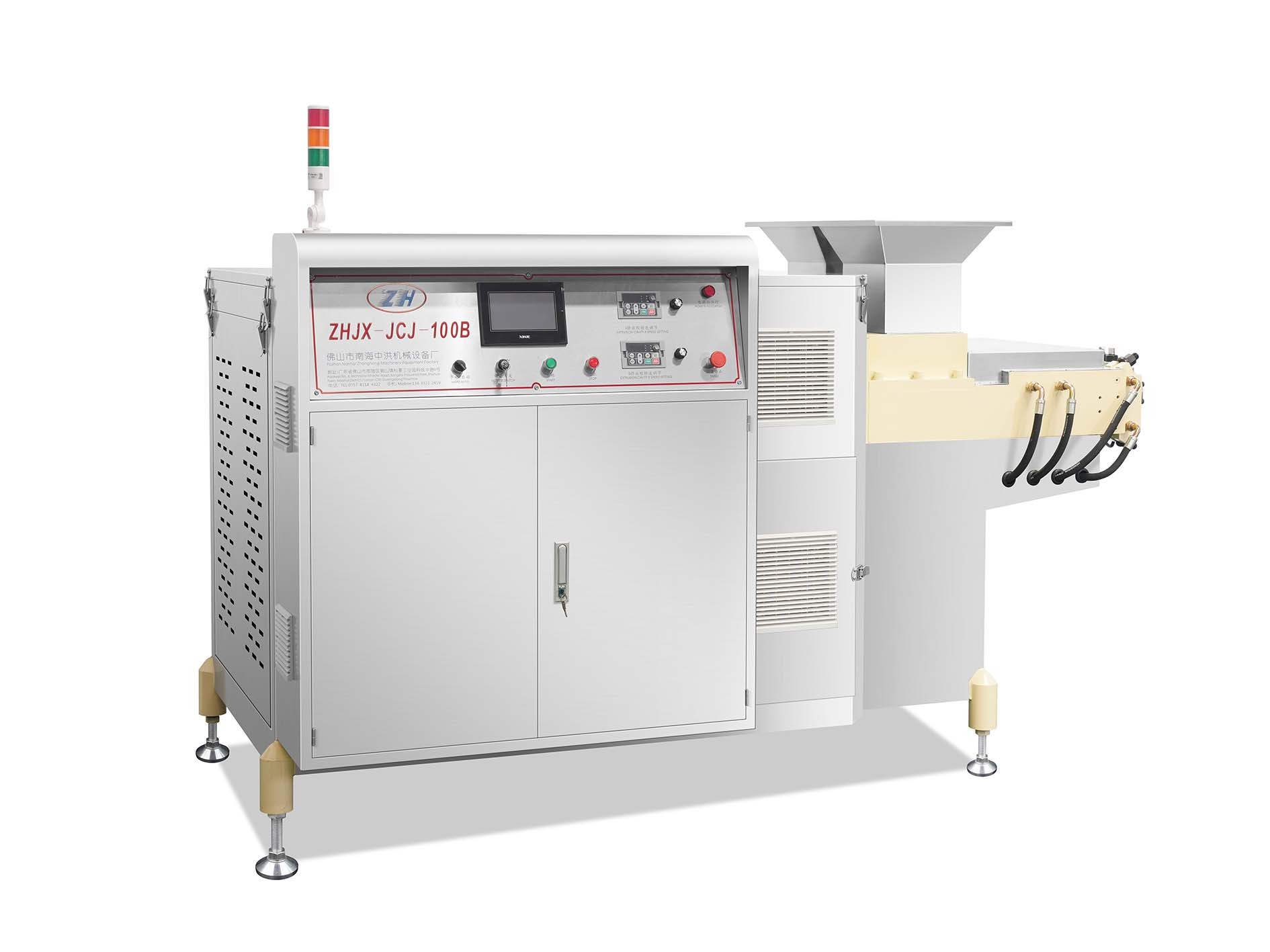
1. The Pain Point: Uneven Heating and Poor Flowability Leading to Material Breakage
Candy raw materials are highly sensitive to temperature fluctuations. Traditional single-tank or basic heating systems typically only provide overall or rough heating for the extruder, resulting in an objective flaw: uneven sizing of the extruded candy ropes.
As the candy mass flows through the barrel, localized low temperatures can cause the mass to harden and its flowability to drop, thereby increasing extrusion resistance and potentially leading to machine jamming or motor burnout. Conversely, localized high temperatures may alter the properties of the mass, triggering coking. This uneven temperature distribution prevents the formation of continuous, smooth ropes during extrusion, making it difficult to guarantee consistent material output.
2. Technical Insight: What is Independent Temperature Control?
To address the aforementioned issues, candy extruders incorporate a zoned temperature control system. Simply put, this divides the extruder into separate, independently controlled temperature zones.
The core independent temperature control system typically consists of three sections: the upper chamber, the lower chamber, and the die head.
By dividing the extruder into these three independent zones, each section can be equipped with its own temperature sensor and a dedicated heating/cooling unit. This allows operators to set the optimal temperature for each specific area based on the unique characteristics of the candy mass.
3. Working Principle
Three independent circulating temperature control systems serve as the hardware foundation of this concept. Equipped with three separate heating circuits at 6kW each, the system provides precise temperature control for the upper extrusion chamber, the lower extrusion chamber, and the die head, creating a highly accurate thermal balance system.
The PLC system automatically controls heating or initiates cooling programs based on real-time temperature feedback to maintain stable water temperatures in each zone. Under this precise control, the candy mass maintains its ideal state and viscosity from the extrusion chamber to the die head. Consequently, the mass flows continuously, stably, and evenly through the die holes, significantly reducing the occurrence of material breakage, streaks, and air bubbles.
The transition from basic heating to 3-zone independent temperature control reflects the evolution of candy manufacturing from fundamental to precision engineering. Only by mastering the science of temperature can manufacturers produce premium candies with flawless appearances and consistent textures.
If you are seeking extrusion equipment that offers precise temperature control to elevate your candy quality, consider Zhonghong Machinery's Candy Extruders. We are committed to providing more scientific and stable temperature control technologies to help reduce material waste on your production line, ensuring every single candy achieves its ideal state.
Low water pressure, uneven heating, frequent breakdowns?
2026-07-07Low water pressure, uneven heating, frequent breakdowns? Shinhoo AHM Series stainless steel multistage pump solves it all.
In small commercial spaces and whole-house heating systems, users often struggle with fluctuating water pressure, poor heating circulation, corrosion-induced leaks, and excessive noise. A restaurant may see water flow drop during peak dining hours – hurting service quality; a villa's underfloor heating may leave rooms cold at the far end – compromising comfort; rusted pump components can contaminate the water supply and shorten equipment life; and frequent, costly maintenance eats into operating budgets.
Multi-stage high head
With a multistage impeller design, the maximum head reaches up to 59 meters, ensuring stable pressure delivery for high-rise or long-distance boosting applications.
Dual connection options
Compatible with both clamp and threaded connections, enabling fast and flexible installation to suit various piping systems with minimal onsite adaptation.
Two mechanical seal choices
Available in graphite/ceramic or graphite/silicon carbide – select the optimal type for your media to ensure durable sealing and extended service intervals.
All-stainless-steel wetted parts
Casing, impeller, and shaft are all made of stainless steel, providing excellent corrosion resistance, long service life, and clean water delivery.
Easy maintenance & long life
Designed for straightforward routine upkeep, reducing total cost of ownership over the equipment’s lifespan.
High protection & NSK bearings
Equipped with premium NSK bearings for low-noise, smooth operation, and built with high-protection-grade construction – suitable for noise-sensitive commercial and residential environments.
With its solid data and proven reliability, Shinhoo AHM Series offers an efficient, durable pumping solution for small-to-medium commercial and premium residential heating applications.

Shinhoo Duplex Pump System丨Basic 50-16 FU Pro
2026-06-26Introduction
Modern villa water systems face unstable and unpredictable water demand due to simultaneous multi-point usage. Bathrooms, kitchens, laundry rooms, and irrigation systems often operate at the same time, leading to pressure drops and system interruptions.
Traditional single pump systems are not designed for this type of load variability. When demand spikes or a pump fails, the entire household water supply can be disrupted.
Shinhoo Duplex Pump System -Basic 50-16 FU Pro is designed to solve this problem through a dual-pump Duty/Standby architecture, ensuring continuous, stable, and intelligent water supply for villa applications.
Product Overview
Shinhoo Duplex Pump System-Basic 50-16 FU Pro is a dual circulation pump system with integrated relay control designed for residential villa water supply.
It operates using two coordinated pumps in a Duty/Standby configuration, enabling automatic switching between pumps based on system demand or failure conditions.
Core concept:
Continuous Water Supply Through Intelligent Dual Pump Coordination
System Architecture & Operating Modes
The system includes a relay-based control panel supporting three operating modes:
Alternate Mode (A – Load Balancing Mode)
· Pumps switch every 24 hours
· Balanced runtime distribution
· Reduced mechanical wear
· Automatic backup activation in case of failure
Standby Mode (S – Continuous Protection Mode)
· One active pump + one standby pump
· Instant automatic switchover upon failure
· No interruption in water supply
Single Mode (OFF – Energy Saving Mode)
· One pump operates independently
· Reduced energy consumption during low demand periods
Key Benefits
Shinhoo Duplex Pump System provides three major performance advantages:
· System Stability improved by up to 70% through dual redundancy
· Service Life extended by up to 50% through alternating operation
· Maintenance Cost reduced by up to 50% due to independent pump service capability
These benefits ensure reliable water delivery in multi-storey villa environments with fluctuating demand.
Engineering Design & Installation Features
The system is designed with modular installation architecture for ease of deployment:
· Integrated relay control panel with A / S / OFF settings
· Clearly labeled power and signal terminals
· Plug-and-play wiring structure for faster installation
· Real-time status indicators for operational visibility
Safety Note: Power must be fully disconnected before accessing terminal components.
Real-Time Monitoring & System Status
The relay panel provides clear operational feedback:
· Green steady light: Normal operation
· Flashing green light: Switching or standby mode
· Red indicator: Fault or system alert
This allows real-time monitoring of system health without additional diagnostic tools.
Application Scenarios
Shinhoo Duplex Pump System-Basic 50-16 FU Pro is suitable for:
· Luxury villa water supply systems
· Multi-storey residential buildings
· Domestic hot water circulation systems
· Integrated HVAC water distribution systems
· Garden irrigation + household combined systems
It is especially effective in environments with simultaneous multi-point water demand.
Conclusion
Shinhoo Duplex Pump System-Basic 50-16 FU Pro delivers a stable and intelligent solution for villa water supply challenges through its Duty/Standby dual pump architecture.
By combining automatic switching, balanced operation, and modular design, the system ensures:
· Continuous water availability
· Higher operational reliability
· Reduced maintenance risk
· Improved energy efficiency
Shinhoo provides a reliable foundation for modern villa water systems where uninterrupted water supply is essential.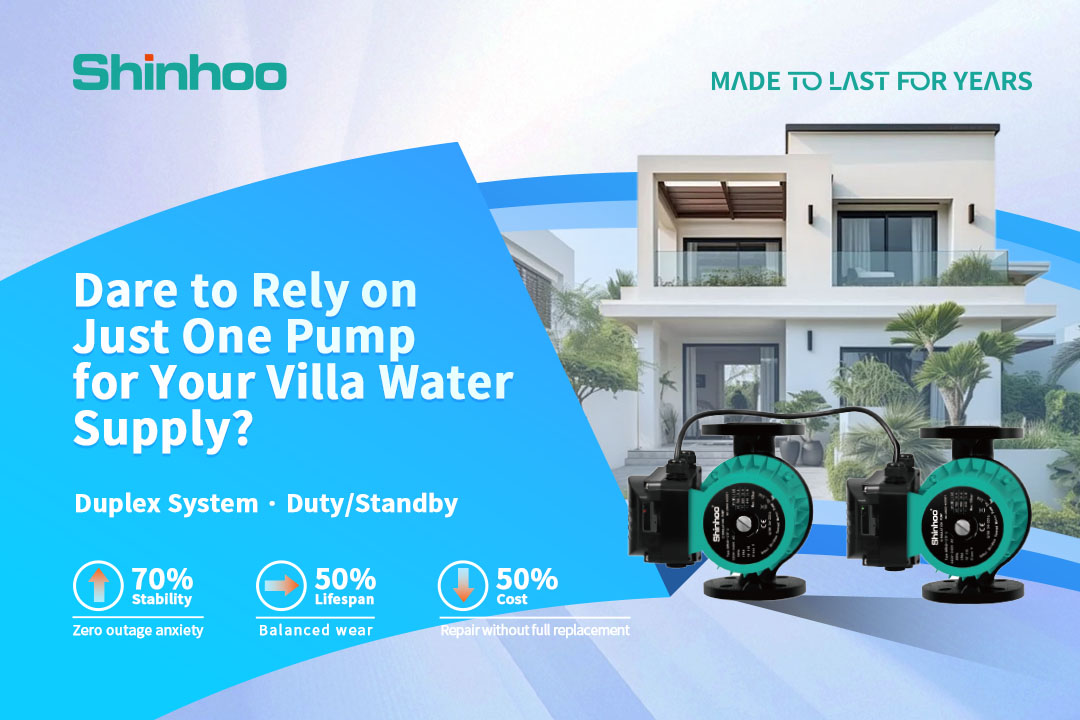
FAQ
What is a duplex pump system used for in villas?
It ensures continuous water supply by using two pumps in a Duty/Standby configuration, preventing water interruption during pump failure or maintenance.
Does the system automatically switch pumps?
Yes. The system automatically switches between pumps based on mode settings or failure detection.
What happens if one pump fails?
The standby pump immediately takes over, ensuring uninterrupted water supply.
Is this system energy efficient?
Yes. It supports single-pump mode during low demand periods to reduce energy consumption.
Can it be used in small residential homes?
It is primarily designed for villas and multi-storey buildings with higher water demand.
Is installation complex?
No. The modular relay-based design simplifies installation for professional technicians.
Twin-Screw Extruder The Standard Choice for Premium Chewing Gum Production
2026-06-25In the chewing gum and bubble gum industry, the term "premium" signifies superior texture and long-lasting flavor. If you look closely at high-end chewing gums on the market those that command a higher price, offer excellent chewability, and maintain their flavor for longer.You will find that their production lines almost universally feature a twin-screw extruder. It may not be the most expensive piece of equipment, but it is an essential staple for premium production lines. The reason is simple: it makes chewing gum production more stable, cleaner, and hassle-free.
Three Core Advantages of Twin-Screw Extruder
1. PLC Automatic Control: Fully Digitalized Process
Premium chewing gum formulations are complex, incorporating various components such as gum base, sugar alcohols, and flavorings. Any fluctuation in ingredient ratios or mixing times can compromise the final texture and taste. Equipped with a Programmable Logic Controller (PLC), twin-screw extruders can:
1.Monitor parameters in real-time, including screw speed, material flow rate, and temperature across different zones.
2.Automatically adjust feeding speeds and screw configurations to ensure a continuous and stable output.
3.Compared to older production lines that rely heavily on operator experience, PLC control drastically reduces batch-to-batch variations and significantly minimizes fluctuations caused by manual operation.
2. Stainless Steel Construction: Hygienic and Durable
High-end chewing gum demands strict hygiene standards. Furthermore, ingredients like sugar alcohols and flavorings can cause ordinary steel to rust and develop off-flavors over time. Twin-screw extruders utilize food-grade stainless steel for all product-contact parts. The benefits are clear:
1. Rust-free and free from metallic odors.
2.Easy to clean, meeting the stringent audit requirements of food manufacturing plants.
3.Exceptional longevity, maintaining a pristine condition even after years of use.
3. Precise Temperature Control: Locking in Flavor and Texture
Temperature plays a critical role in chewing gum quality. Excessive heat causes the gum base to become sticky and the flavorings to evaporate, while insufficient heat leads to uneven mixing and extrusion difficulties. Twin-screw extruders provide highly stable temperature control, which means:
1. Flavorings are not degraded by high temperatures, resulting in a longer-lasting aroma in the final product.
2. The gum achieves the perfect chewy texture,neither sticky nor overly hard.
3.The defect rate is significantly reduced, preventing raw material waste.
Continuous Operation with a Failure Rate of Less Than 0.5%
What is the biggest fear for any factory? Frequent breakdowns that halt production for hours. For production lines handling large orders, stability is paramount. Twin-screw extruders are specifically engineered for long-term continuous production. Real-world operational data shows an annual failure rate of less than 0.5%.This translates to:
1. The confidence to accept long-term contracts from major clients.
2.Reduced reliance on extensive maintenance personnel.
3. High equipment utilization rates, leading to a faster return on investment.
The twin-screw extruder has become the industry standard for premium chewing gum production for good reason. Its PLC automatic control digitizes the manufacturing process, stainless steel construction ensures food safety and durability, and precise temperature control locks in flavor and texture. Backed by a continuous operation failure rate of less than 0.5%, it delivers unmatched reliability. For chewing gum manufacturers looking to break free from low-price competition and enter the premium market, a twin-screw extruder is not just a piece of machinery,it is your ticket to new heights of quality and efficiency.
Want to find the right twin-screw extruder model for your production capacity or explore production line upgrade solutions? Contact us today for a comprehensive technical assessment.
Boosting Forming Machine Productivity 3 Key pathways
2026-06-25
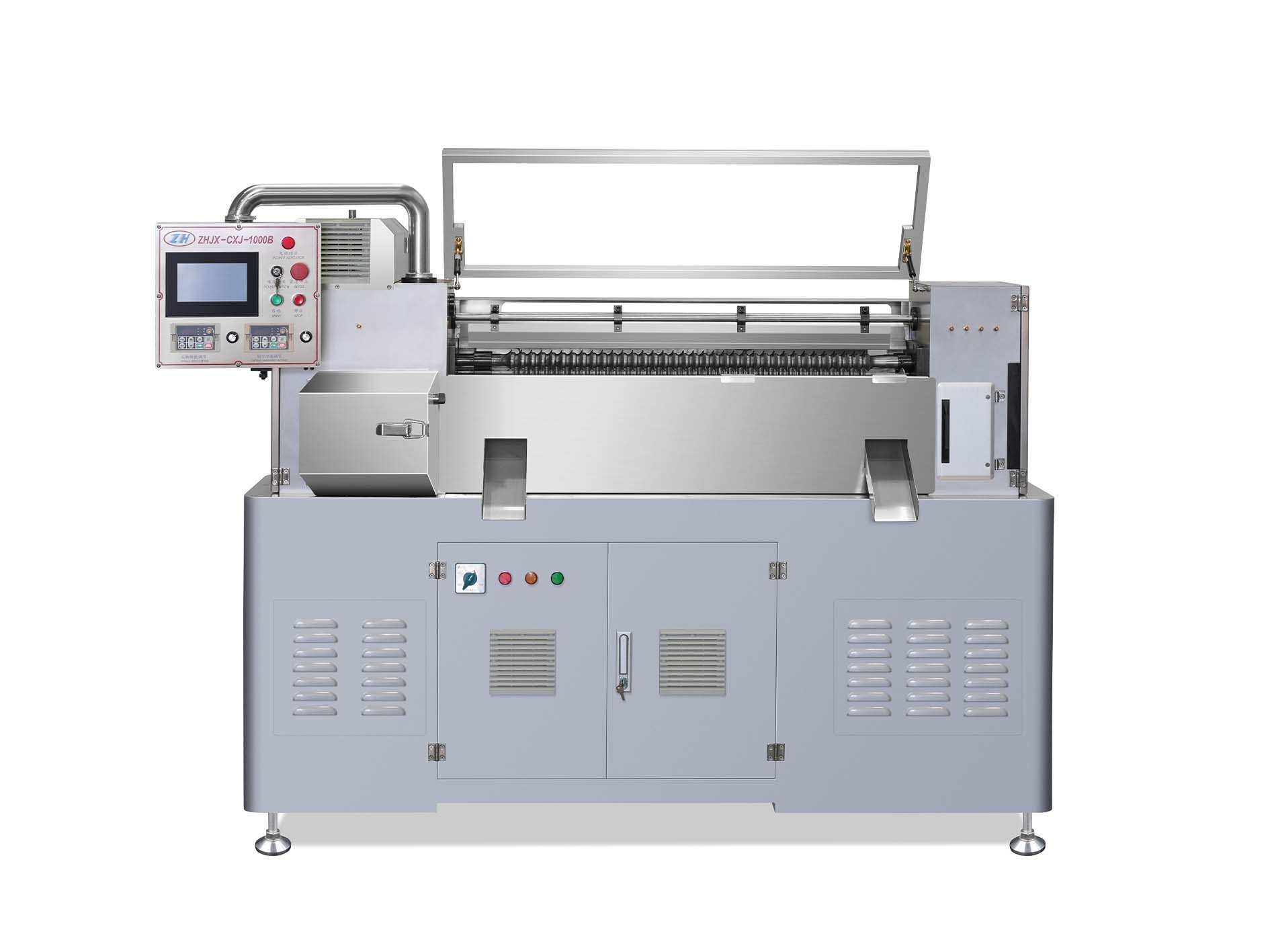
In bubble gum production, the forming machine is the core equipment that defines the product's shape, specifications, and texture. The efficiency of this machine dictates the productivity of the entire production line, which in turn impacts the company's economic returns and market competitiveness. For manufacturers, selecting a high-performance forming machine is a critical decision to ensure both product quality and output. Today, let's break down the three pathways to boosting forming machine capacity, helping you precisely break through production bottlenecks.
Pathway 1: Optimizing Mold Design
As the core component of the forming machine, the mold directly contacts the gum base to complete the shaping process. Its effective working length determines the number of products formed in a single cycle, serving as the foundation for capacity improvement. Standard industry equipment typically features a mold length of 500mm, which limits the output per cycle.
A viable solution is to extend the mold length from the original 500mm to 900mm or more. By optimizing the effective working length to increase the single-cycle output, this upgrade can boost production capacity by 10% to 15%.
Pathway 2: Streamlining Operational Processes
Complex operating systems inevitably eat into the machine's actual working hours, thereby affecting overall capacity. Therefore, the user interface of the forming machine should prioritize ease of use to minimize operational errors.
Furthermore, switching molds is required for different candy shapes. Cumbersome changeover procedures can significantly increase machine downtime. These procedural issues may seem trivial, but they are actually hidden killers that hinder capacity growth. By simplifying operational workflows, manufacturers can enhance process fluidity and Overall Equipment Effectiveness, paving the way for a significant boost in production capacity.
Pathway 3: Intelligent Control Systems
Currently, most equipment on the market relies on mechanical core structures. These require skilled workers for manual debugging, which not only drives up labor costs but also suffers from weak stability. Since mechanical structures cannot make real-time adjustments, they often result in uneven gum pellet sizes.Long-term continuous production is key to unlocking full capacity. Therefore, equipping the forming machine with a stable, intelligent control system is crucial. This system supports the interaction between technicians and the machine, reducing maintenance frequency and defect rates while significantly improving product consistency.
If you are seeking solutions to boost bubble gum production capacity, Zhonghong Machinery’s forming machines are the premier choice, perfectly balancing high output with stability. We invite you to contact us for detailed specifications and case studies, and let's explore the best path for your capacity optimization together.
Key Specifications & Performance:
1.Extra-Long Mold: 1010mm working length.
2.High Cutting Frequency: 45-48 cuts per minute.
3.Superior Stability: Defect rate remains below 5%.
4.High Capacity: Single unit output reaches 250-280kg/h, outperforming industry peers by 15%.
5.User-Friendly Operation: Features simple controls and one-touch mold changing.
6.Advanced Performance: Fully intelligent design driven by servo motors and a PLC core, equipped with a touch screen for maximum ease of use.
Essentials for a New Xylitol Factory Production Process and Staffing Plan
2026-06-25For investors and factory managers planning a new xylitol production line, a clear and complete production workflow, paired with a scientific and reasonable staffing plan, is the key to a smooth launch and stable operation. Drawing on current mainstream automated xylitol chewing gum production techniques, this article comprehensively outlines the standard production process and provides a practical staffing plan that can be implemented immediately, offering valuable reference for new production lines or factories.
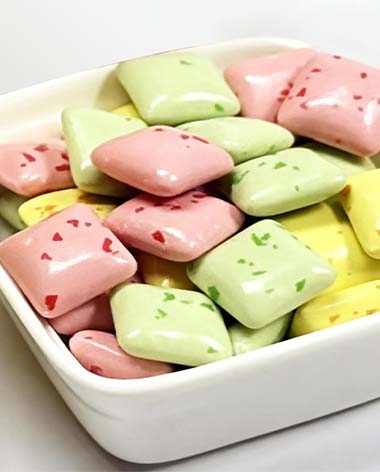
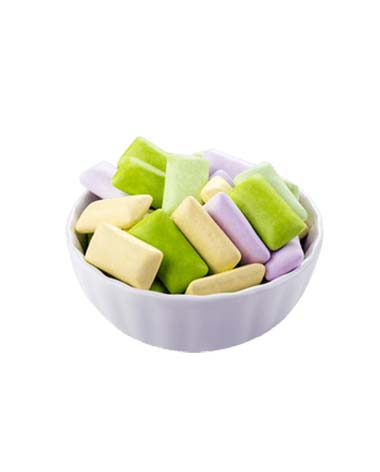
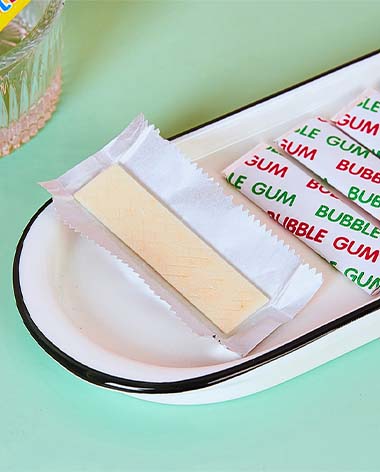
Standard Xylitol Production Line Process
1.Raw Material Pre-treatment
The main raw materials for xylitol chewing gum include xylitol, gum base, maltitol, glycerin, lecithin, and flavorings. Before production, these raw materials need to be prepared and pre-treated according to the formula.
2.Melting and Mixing
After the gum base is heated and melted, xylitol and other auxiliary ingredients are added. They are fully mixed in a mixer to form a uniform chewing gum base.
3.Extrusion and Forming
The mixed gum base is extruded through an extruder and then pressed into uniform sheet blanks by a sheet-forming machine. Common shapes include sheets and pellets.
4.Cooling and Setting
The formed chewing gum enters cooling equipment to be cooled and set at a constant temperature, ensuring the texture and stability of the product.
5.Coating and Conditioning
For hard-shell xylitol bubble gum, coating and conditioning steps are required. A coating machine is used for coating, coloring, and polishing to give the product a brighter appearance.
Staffing Plan for a Fully Automated Xylitol Chewing Gum Production Line
Sugar Powder Machine: 1 HC
Oven: 1 HC
Mixer: 1 HC
Extruder: 2 HC
Tablet Forming Machine: 1 HC
Cooling Tunnel: 0 HC
Screening Machine: 1 HC
Packaging: 5 HC
Aging: 1 HC
Coating: 3 HC
Aging: 1 HC
Polishing: 1 HC
Aging: 1 HC
Packaging: 5 HC
Total: 19 HC
The above outlines the production process and staffing allocation for a basic xylitol production line configured by Zhonghong.
Building a new xylitol factory requires not only selecting stable and mature equipment but also planning the production process and staffing in advance. If you have further ideas about this project, feel free to contact us. Whether it's a basic production line or a customized solution, Zhonghong can provide you with professional and reliable plans.